

Working from home is nothing new. Surprisingly, National Work from Home Day was started around 2010. For years, there have been companies offering remote capabilities for teams and employees. However, it was mostly a seniority level privilege. With the shut down of the world during Covid-19, it no longer was a privilege to work from home, but a necessity. Social distancing forced businesses to close their doors and companies to rethink their corporate strategies. Thus began the influx of work from home employees.
Some people saw remote positions as a potential setback for productivity. Meanwhile, others saw it as a refreshing change to the hectic day to day by eliminating commute time and excessive spending. Companies shifted their focus to ensure employees were properly prepared to work from home. Some companies required employees to have certain set ups and others provided equipment for specific company use.
Once the pandemic was coming to an end and businesses started to open again, a question rose into most employer’s minds. What do we do about remote workers? Some companies urged their employees back into office. Regardless of many showing an increase in productivity and work completion. According to Forbes article, this lack of trust in worker productivity has led to what Microsoft researchers termed productivity paranoia. “Leaders fear that lost productivity is due to employees not working, even though hours worked, number of meetings, and other activity metrics have increased.”
On the other hand, some employers saw an improvement in productivity with their remote setups. So they continued that work structure. Then there were quite a few companies who decided to meet employees halfway and offer hybrid positions. This gave employees the ability to have one or two work from home days, but still have meetings and breakout sessions in the office.
Benefits of Work From Home Days

Employees were back and forth between all of these options. Some stayed and followed the changing structure, while others left to find a work structure that most suited their needs. Sometimes they looked for remote jobs and sometimes they looked to make the workday simpler with hybrid roles or flexible work hours. Regardless, work from home became significantly more prominent as a company structure than it was in past years.
Working from home gave many people opportunities they didn’t have before for a number of reasons. Some people used that morning time before clocking in to meditate, cook breakfast, or exercise. Before they would have spent that time commuting through traffic or on a packed train or bus with everyone else. This brought solace and peace instead of starting off the day irritable and on edge. A stressed out employee tends to be a less productive employee.
Most employees have appreciated their employers for incorporating a remote or hybrid work style into the company structure. It not only leads to a less stressful work environment, but at times a more productive environment. With the influx of digital tools accessible by every company, working from home has become more possible and less maintenance.
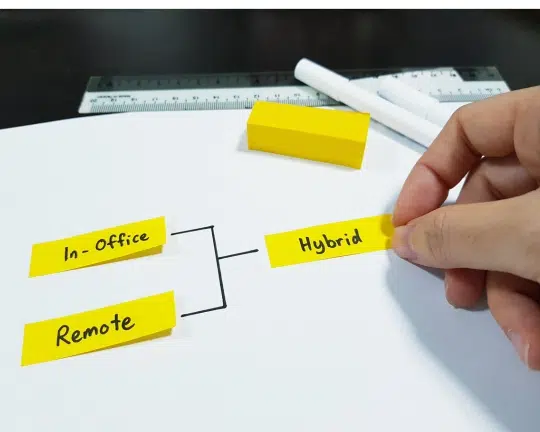
Torn Between In Office, Remote, and Hybrid
For instance, my aunt has a work from home job. Her employer sent her the equipment that she would need and only required her to have a certain speed and dual monitors. On her lunch break, she said she usually goes for a walk with the dog. After her walk she hops right back on the computer and gets back to work. My aunt doesn’t miss a beat and I found that this actually makes her more productive than if she had been in office.
She takes a break from sitting all day and stretches out and gets a boost of energy from a quick workout. She gets to take her dog out so she’s less worried about the dog’s needs. Afterwards, she gets immediately back on the computer because she’s already in a comfortable setting. I have seen quite a few people who work from home report they feel more energized and focused without the office distractions. Some even work past their shift. This is because the time they would have spent commuting is spent finishing up a project or task instead of waiting until the next day.
When it comes to working from home, every company has their own methodology to boost numbers and increase growth. National Work From Home Day is a day meant to acknowledge the employers that are incorporating a more flexible work environment. Whether it be a fully remote or hybrid, few days remote, work model. However, according to Vault.com, it’s also a day to encourage employers to experiment with remote work. Many professions have the capability to work from home if the company strategizes properly.
Key Tips to Check Off for Remote Work
Indeed’s Career Guide found customer service, data entry, and call center representatives are common remote jobs. Other common, more specialized roles, are web designers, graphic designers, or content writers. Especially creative jobs like graphic design and blog writing because those are all pretty much done from a computer.
So, if you have little to no prior experience with remote work environments and have been contemplating remote work, this is your reminder. You may not know where to start so here’s a few tips. This current selection of tips is nowhere near all encompassing, but these tips are common for successful remote work-from-home jobs.
- Come up with a schedule that works for you and your team. Let’s say your team usually has brainstorming sessions in front of a smart board on Thursdays and Fridays. Then maybe a Monday or Tuesday would work better as a remote day. Everyone will stay organized with a schedule and eliminate any confusion about who is where and how they can reach someone.
- Ensure the team is using a digital space to organize tasks. If the team doesn’t have a dedicated chat tool, a remote plan will fall through pretty quickly. Teams should be using a cloud based software to hold projects that the entire team can see. They should definitely be using a chat platform like Microsoft Teams or Slack. If not, you can find any free service or paid subscription to accommodate your team size and needs.
- Track productivity metrics. Have a base for tasks completed. Talk with employees about what they plan to complete when they work remote. Again, digital here is best. A Kanban board is a great way to help everyone track progress throughout the day. Afterwards, see if more or less tasks were completed. Data doesn’t typically lie.
Trust in the Workplace
I have laid out quite a bit of key information and benefits throughout this article. In order for remote work to be successful, even if the metrics prove it is, there has to be a level of trust. In any job, there has to be a level of trust between employers and employees. If not, this would lead to high turnover, higher rates of conflict, less creativity and engagement, and higher rates of micromanaging. This ultimately leads to a decline in overall productivity.
For a work from home model to work, an employer has to trust that the employee is getting their work done. A pretty obvious way to track that is to check if the task got done? Was the project turned in on time? Was the employee communicating with the team and being just as active in team engagement as when in office. If the answer is yes, then keep remote days as part of the business module. If not, then regroup and see what went wrong. Remote work doesn’t work for every single person. I have seen some companies offer remote days, but keep the office open on those days for employees who would prefer working in the office.
National Work from Home Day is the Perfect Opportunity
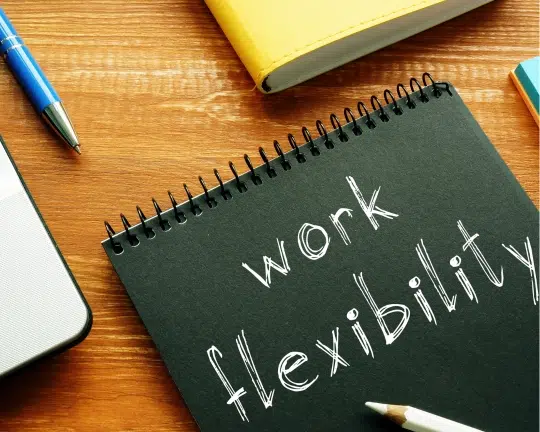
You really won’t know if you don’t at least give it a try. Obviously, I’m not referring to professions like nurses or construction workers. Imagine going to the hospital for a bad stomachache. You’re just sitting in an empty room and listening to the nurse tell you how to check your vitals, run an IV, and read the machine all over the phone. That won’t end well.
However, most office workers do the majority of their work from their computer. Even a few companies with sensitive documents and government information allow some of their employees to work remotely. They instill high security measures such as VPN’s and secure equipment. Most of the secure remote jobs I have seen are independent contractors, while most state workers have gone back in office.
Take a look at your team and their needs. Let them weigh in on the possibility of remote work days. Then, try it out. See if remote work from home days would work for your employees. Maybe your office model will actually benefit from remote work. Maybe too much work has to be done in the office for a specific team to allow fully remote work days. If that is the case, then just try to introduce 1 or 2 work from home days. Let National Work from Home Day be the driving force to try a remote or hybrid option for your employees!