
There’s a reason why most corporate team-building events aren’t viewed as “fun.” Many people forget that the most important piece of hosting a memorable team-building event is not the activity itself. It’s the feeling of the event.
The best team-building idea I have ever found is to pump vibrant energy into the room the moment the program begins. And then keep that enthusiasm humming until the last participant walks out. When the space crackles with excitement, communication skills sharpen, problem-solving skills accelerate, and even the quietest group members lean in instead of tuning out.
Over time, I’ve noticed that top-notch facilitators rely on three simple secrets to make their team-building activities interactive and fun for small groups, large groups, and blended in-person teams with remote colleagues. These principles work whether you have 40 minutes in a hotel ballroom or a full day at an off-site retreat center.
The keys to a great team-building activity include:
- Inserting energy into your meeting right away.
- Keeping everyone active and involved the whole time.
- Creating an emotional response strong enough to lock the memory in place.
If any one of those elements is missing, enthusiasm drains and your big investment turns into “just another meeting.” When they all appear together, you create the kind of moment people rave about long after the coffee cups are tossed and the room is cleared.
Three Steps to Create a Great Team Activity Without Blowing Your Budget.
A quick note before we dive in: you do not need an unlimited budget or cutting-edge technology to run a phenomenal program. What you do need is creativity, a willingness to get everyone moving, and the discipline to keep the schedule tight enough that nobody finds time to check email.
Step 1: Team-Building Events Must Insert Energy into Your Meeting
Movement is a great way to inject life into any gathering. The longer participants stand around, or worse, sit and listen to a monologue, the lower the energy drops. Questions from the stage help a little, yet they slow large groups because only one person can answer at a time while everyone else waits.
My favorite approach is to divide the room into teams and give them a task that demands motion and quick thinking. For instance, instead of pre-assigning tables, place a small team number on every name badge and remove table numbers altogether. Once people are inside, announce that their first challenge is to locate teammates who share their number. The hunt sparks team-building games, boosts conversation and morale, and cranks up excitement before the formal program even starts.
For an extra jolt, launch a five-minute scavenger hunt. Send each small team racing for items such as a neon sticky note, an index card signed by a manager, or a coffee mug with the company logo. The ticking time limit forces quick thinking, and the finish-line cheer sets a fun tone for the rest of the session. Remote workers can join through webcams by waving objects on screen, allowing them to feel the same surge of adrenaline. During the debrief, ask how limited resources encouraged creative thinking and how the search united different people from different departments in pursuit of a common goal.
Extra idea to extend energy: play an upbeat 30-second music clip every time a team delivers an item. The sound cue acts like a starter pistol, raising heart rates and reinforcing that energetic atmosphere you want to preserve all day.
Step 2: Keep Everyone Involved and Active
Once the energy level in the room is raised, the next priority is to keep every participant plugged into the activities for the entire program. That can be the toughest task when the agenda stretches on. Yet it’s also the most essential piece of the puzzle.
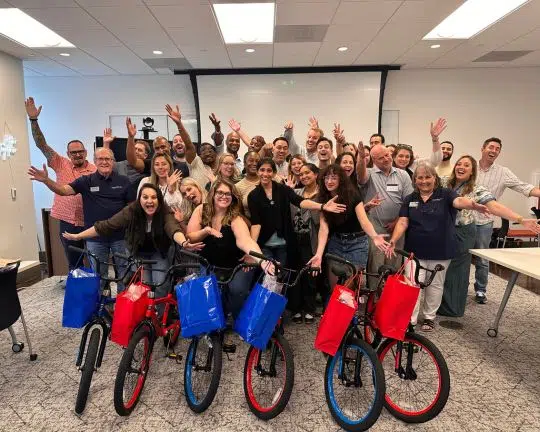
The simplest way to succeed is to choose challenges that make participants rely on one another. Philanthropic projects underscore this point. A favorite option these days is having teams assemble bicycles for kids in need. Many organizers assume the bike-building itself is the highlight, but turning wrenches—or doing any purely physical chore—gets old fast when it’s the only thing happening.
If you divide everyone into small teams and tell them to build, one or two people at each table dive in while the rest stand back and watch. At any given moment, that leaves roughly 2/3 of the crowd with nothing to do.
Instead, combine the build with extra steps that draw more teammates into the action. For instance, have each group solve a quick puzzle or complete a short relay to earn every part. The real key is to watch the room while the event unfolds and note who’s participating and who’s only observing. When too many people slip into spectator mode, add another simple task so the watchers turn back into doers.
Step 3: Create Some Emotional Response from the Team Activity
The specific emotion you trigger is less important than making sure a real feeling shows up.
Take a bike-building event: when the finished bicycles are handed to the kids, the giveaway creates a powerful, heart-tugging finale. In other programs, the goal might be sheer competition—adding a timed race or head-to-head contest can crank up the energy. Use that approach carefully, though. Pitting teammates against each other can sometimes undercut cooperation.
Surprisingly, even frustration can positively boost engagement. In certain challenges, not every rule is revealed up front, so teams try, fail, and feel tension rise. Yet, like any tough puzzle, once they crack the code, pride and satisfaction immediately replace the irritation.
Think back to the Rubik’s Cube craze of the ’80s. That little cube caused plenty of aggravation. But the moment someone solved it, they couldn’t wait to share the trick. Each time the solution passed from one person to the next, a fresh wave of accomplishment went with it. A well-designed team-building event can deliver the very same progression—from struggle, to breakthrough, to shared triumph.
Be Aware Of Draining Activities

Regardless of how much energy you pump into an event, the nature of certain activities can be draining. A lecture masquerading as training, a trust fall that terrifies half the room, or a puzzle hogged by one dominant voice can flatten even the best plan. Although these activities make sense in theory, their repetitive nature only causes participants to lose any interest they may have had.
These situations can occur during any event—the important thing to keep in mind is how to salvage the situation instead of harping on it. The best way to rescue a sagging room is by shortening instructions, displaying a clear timer, and tying success to collaboration rather than individual speed. If the vibe slumps, pivot quickly with team-building exercise options that refocus the entire group. Even two-minute breaks set to music can recharge attention spans.
Make Your Event Memorable From Start To Finish
High-energy events are not fluff. Teams that share upbeat memories collaborate faster, fix issues with fewer meetings, and radiate positivity clients notice. The ripple shows up in quicker project delivery, lower turnover, and a workplace where people volunteer ideas instead of guarding turf. From a financial standpoint, a modest team-building event often outweighs its cost, making it a good investment and the best way to lift morale and productivity in a single stroke.
If you like numbers, measure three indicators for 60 days after a high-energy workshop: average response time to internal tickets, cross-department referrals, and voluntary sign-ups for optional committees. Those metrics usually climb because enthusiasm spreads through informal conversations, quick Slack messages, and louder hallway laughter. Energy is contagious, and it rarely stays confined to the meeting room where it started.
Focus on energy, protect enthusiasm, and your next gathering will turn strangers into collaborators, projects into victories, and the work environment into a place people genuinely enjoy.