

Career growth does not fall into your lap. You have to do more than what’s expected of you. You have to reach for it.
It starts small. You spot a problem and solve it. Take the lead before anyone asks. You go the extra mile when no one is watching. Doing more than expected signals something to leadership. It says you are not just waiting for growth to arrive. It says you are ready for more now.
Everything starts by taking the lead. You identify and solve problems before they land on someone’s desk. You pursue the opportunity nobody else claimed. That proactive habit builds trust and visibility over time.
Consistently going the extra mile shows your commitment to your own success and your company’s. It is always worth that first step. It is how you earn real job security, and honestly, more happiness at work.
That is what doing more than expected looks like. Below are three things it does for you, proven by two turns in my own career and one of the greatest underdogs in sports.
- When you step up in a crisis, leadership remembers you later.
- Every starter was a backup first, so outwork everyone while you wait.
- Saying “that’s not my job” keeps you on the bench.
When You Step Up in a Crisis, Leadership Remembers You Later
My boss called me the day before we were all supposed to fly to Charlotte. He had just tested positive for the new COVID variant.
He had been in the office two days earlier. So three of our coworkers had to quarantine too. Suddenly, half our team was out.
The timing could not have been worse. The pandemic had been brutal on our industry. Nobody was meeting, and classes were shelved, so we had been running with a skeleton crew.
Then late 2021 hit, and a year and a half of postponed meetings all got booked at once. We went from famine to feast. We were ecstatic to be back to work. Our small but mighty crew was hopping all over the map.
The biggest project on the board was a university in North Carolina. They hired us to run a team activity for their entire incoming freshman class. It was so large it needed almost our whole team.
Luckily, I had been teaching in another state that week. So I jumped in and took over day-to-day operations from my home office. It was a crash course in logistics and scheduling. But I kept the company running without much of a hiccup.
The event was the real problem. We needed ten certified facilitators. With four people out, I had barely half that. Delivering it as planned was not going to work.
Working With a Doomed Situation
I could have panicked. I could have told the client we had to postpone. That would have been the safe, expected move. But it also would have burned a relationship we had spent years building. So the other facilitators and I built a new plan. We reconfigured the huge program into two smaller back-to-back events. We needed half the facilitators, and the client saved a lot on travel. Then something better happened.
The smaller groups let us add networking before the activity. The students loved meeting each other before the fun began. All those new faces finally had a way to connect. We also taught them a memory hack I wish I had known back in school. And the second half of students got a deeper orientation that fit the smaller group. So instead of one activity, they got two, plus tips for their college journey.
Both the client and the incoming freshmen loved it. In fact, it worked so well that they have brought us back every single year since to run the exact same program.
And remember, while all of this was happening, I was also juggling the jobs of my quarantined teammates. My impromptu leadership was far from perfect. I made plenty of mistakes along the way.
But the whole team saw something that week. They saw that in a pinch, they could rely on me.
When you do more than what is expected, people start to see your potential too.
Here is the part that mattered for me. As the company grew, the CEO began creating new executive positions. He remembered how I stepped in when he needed me. So I was at the top of his list.
“The difference between ordinary and extraordinary is that little extra.”
— Jimmy Johnson
Every Starter Was a Backup First, So Outwork Everyone While You Wait
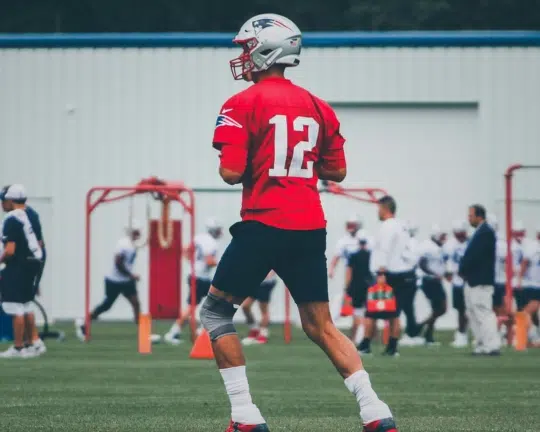
Do you know how many NFL quarterbacks began their career as a starter?
None.
Every starter learned the game in middle or high school. Most sat as a backup for years before they got a shot. And once they succeeded in high school, they went to college and often ended up on the bench again.
A backup never knows when he will be needed. He may train all season and watch from the sideline. But he must stay fresh and ready to step in the moment his team needs him. Tom Brady lived this better than anyone. He grew up idolizing Joe Montana and the 49ers and always wanted to play.
In high school, he played football and baseball. I can relate. I played soccer and volleyball until they made me pick one for varsity.
Brady was barely recruited. He chose the University of Michigan and spent his first two years behind future NFL quarterback Brian Griese. When he finally won the job, he faced pressure from a highly touted freshman named Drew Henson. He persevered anyway and led Michigan to an Orange Bowl win over Alabama. Even so, the pros doubted him. At the 2000 draft, scouts knocked his athleticism and average build. He fell all the way to the sixth round, pick 199.
New England took him there. He arrived as the fourth-string quarterback, behind Drew Bledsoe and two others. Nobody handed him anything. So, he decided to earn it.
He worked to improve every facet, not just his strengths.
Earn Your Edge
Brady’s edge was never raw talent. It was preparation.
“I’m not a natural athlete. My work ethic has made me one of the best.”
— Tom Brady
He spent countless hours studying film. Dissecting defenses and learning opponents’ tendencies. He hunted for the smallest advantage in every matchup.
He also kept detailed notes on every game and every opponent. Then he refined his approach based on what worked and what did not. Nothing was left to chance.
His discipline reached his diet too. He leaned on anti-inflammatory foods and cut processed sugar, white flour, and dairy. He credited that nutrition for his longevity and quick recovery.
I have a lot of respect for people who treat their body like a temple. They say one of the biggest flexes is controlling what you put in your mouth.
Most players took the offseason lightly. Brady treated every part of the year as a chance to get better. His commitment to his body was unmatched, and it showed.
He also trained his mind. He worked with sports psychologists and used meditation and visualization to stay sharp. As a dedicated yogi, I can attest to how therapeutic that practice is for the mind.
He was often the first one in the facility and the last to leave, even as a rookie. That example set the tone for his teammates. Whether it was a new diet, a new drill, or a new defensive scheme, he chased better every single day.
Then His Moment Came, the Way These Moments Do, Without Warning
In 2001, starter Drew Bledsoe took a brutal hit from Jets linebacker Mo Lewis. The injury was severe. Suddenly the backup was the starter.
Brady was ready. He stepped in and never looked back. Despite his inexperience, his poise and football IQ impressed coaches and teammates alike.
The Patriots caught fire. They finished the regular season 11-5 and rode that momentum into the playoffs. Then came Super Bowl XXXVI against the heavily favored Rams, “The Greatest Show on Turf.”
Brady orchestrated the game-winning drive. He set up Adam Vinatieri’s field goal as time expired, and New England won its first title. That victory started a dynasty.
He would go on to win six Super Bowls with the Patriots and add a seventh with Tampa Bay. Along the way he shattered records: most Super Bowl wins by a player, most Super Bowl MVPs, and the most career touchdown passes and passing yards.
Tom Brady retired in February 2023 after 23 seasons. He was not the most gifted quarterback to enter the league.
He was the one who outworked everyone while he waited for his shot.
You are probably not chasing a Super Bowl ring. But the principle carries over to any job. The preparation you put in before your moment is what lets you seize it when it arrives.
So do not treat the wait as downtime. Treat it as training camp. Learn the role above yours before anyone asks you to fill it.
Saying “That’s Not My Job” Keeps You on the Bench

It has always boggled my mind to hear people say, “That’s not what I get paid to do.”
I once had a coworker who checked his new-hire paperwork before any new task. He read the job description carefully to make sure he was not doing extra work.
He felt his expertise should be compensated first. So, if the company was not paying him more, he was not doing more. He did the bare minimum and stayed right inside his comfort zone.
I understand the instinct. Nobody wants to feel taken advantage of at work. But there is a real difference between protecting your time and hiding behind a job description.
The person who only does what is written down never gets to show what else they can do. Their manager never sees the range. And range is exactly what earns the next role.
Here is the problem with the bare minimum.
If you only aspire to be a bench warmer, you will never be a Tom Brady.
Playing it safe keeps you exactly where you are.
Key players are different. They are out on the field learning new tricks. They make themselves available for the winning opportunities they helped create.
You Can Do the Same
Notice what ties these three stories together. I did not wait for a title to step into a crisis. Brady did not wait for playing time to outwork the roster. Neither of us asked permission to do more.
That is the whole idea. Doing more than expected is always worth the first step. It benefits your organization, and it grows you personally and professionally.
So, watch for your moment, because it rarely announces itself. When your opportunity shows itself, be ready to step up.
You can too.